
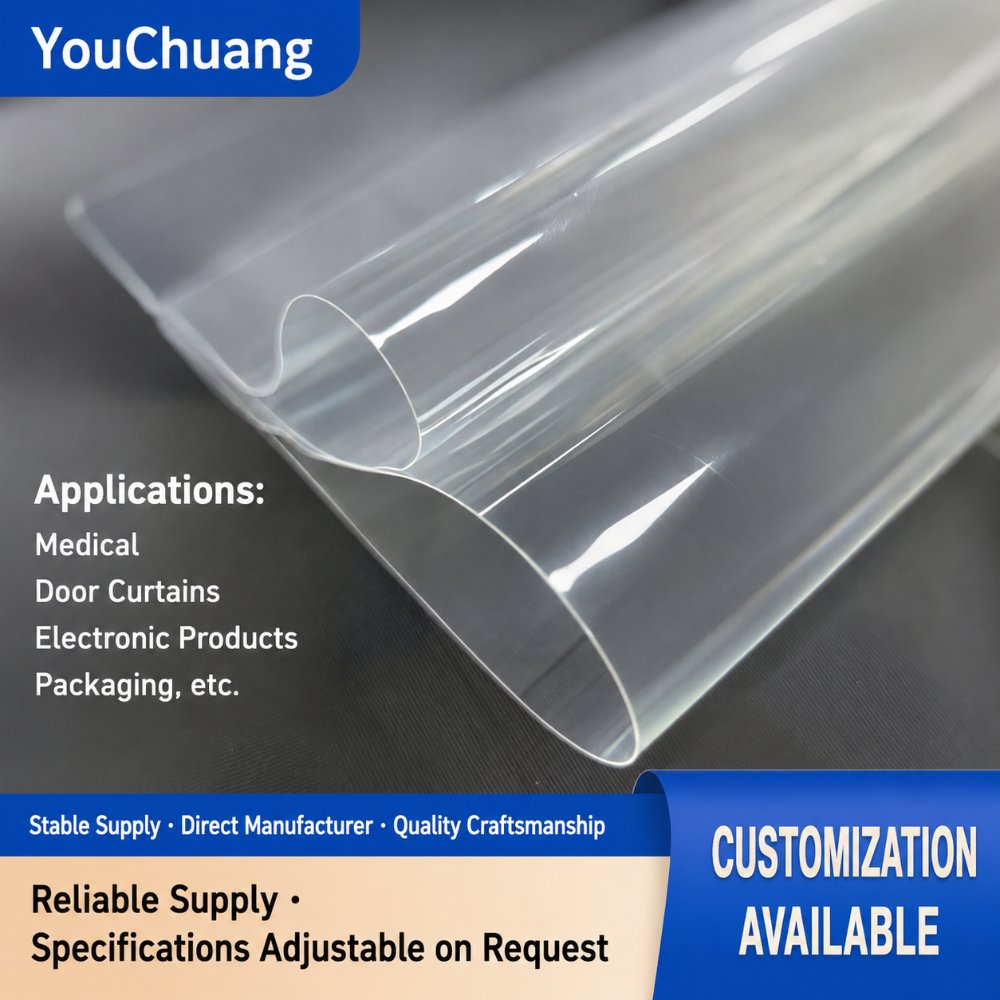
An EVA film RFQ should define what width is being measured, how the film is presented and which quantity unit supports the price. Give the supplier a labelled sample reference and ask for a written reply against those fields. A catalogue product name or photograph cannot establish the thickness, usable width, roll length or material grade of the order you intend to place.
Begin with the exact catalogue reference
Youchuang lists a clear film product under its EVA film category. That listing is a useful starting point for an enquiry, while its descriptive wording and pictured appearance remain catalogue information. Attach the actual product link to your request and identify the feature you want the supplier to match. Avoid copying the entire product title into a purchase specification when the title includes performance or application claims that your team has not verified.
Keep a sample identifier separate from the seller’s product name. The identifier can connect a photograph, measurement record and quotation without suggesting that every clear film is equivalent. If the supplier proposes another item, ask for its own reference and a separate comparison. Your team can then approve a substitution deliberately rather than discover later that different samples were discussed under one informal name.
State how width should be measured
A request for a wider roll is incomplete unless both sides understand the measurement. Ask the supplier whether the offered width describes the film as supplied, an intended usable area or another presentation. If your application needs a clear usable span, show that span on a drawing and distinguish it from edge areas. Do not infer a guaranteed usable measurement from the width of the product shown in a photograph.
When reviewing a physical sample, record its condition and how it was laid out. Note whether the material was relaxed or held in place for the measurement. Ask the supplier to use the same agreed method when reporting its sample. This does not create a universal testing method; it makes the comparison traceable. Any tolerance and inspection procedure still needs written agreement for the actual item.
Enquiry field | Buyer reference | Supplier reply needed
Item identity | Exact product link and sample ID | Matching offered item
Width definition | Annotated span to be compared | Meaning of quoted width
Thickness basis | Required unit and measurement request | Proposed value and method
Roll presentation | Sketch or requested format | Available presentation
Quotation unit | Preferred unit with quantity | Price basis and exclusions
Separate roll presentation from quantity
A roll is a presentation, not a complete quantity description. Two offers priced per roll may cover different amounts of material. Ask the supplier to identify the quantity represented by each quoted unit and the basis used to calculate it. If the offer uses weight, length or area, keep that unit visible throughout the comparison instead of silently converting it using assumed thickness or density.
Record the requested presentation independently from the price unit. The enquiry may need information about how the film is wound, supported, wrapped or identified. Those are questions for the supplier, not features established by the catalogue photograph. If a particular roll arrangement matters to handling or a later conversion step, include a drawing or reference sample and ask whether the proposed item can be supplied that way.
Make the sample answer useful to purchasing
Ask for a sample reply that connects the offered film to the quotation. The reply should identify the sample, state the measurement basis and list any differences from your request. A photograph of a roll without a sample identifier may help you recognise its appearance, but it cannot replace the written connection between the material reviewed and the material priced.
Keep visual appearance and application suitability as separate review decisions. Clear-looking film does not establish food-contact suitability, medical use, chemical composition, waterproof performance or compliance with a regulation. If your intended use has specific requirements, describe those requirements and request evidence tied to the proposed item. Do not treat generic website certificates, application labels or promotional text as approval for your order.
• Attach the catalogue link, sample identifier and annotated width reference.
• Ask for the offered quantity unit and the amount represented by each priced unit.
• Record unresolved differences beside the quotation rather than hiding them in email threads.
• Approve the sample identity before authorising a substituted item or measurement basis.
Keep revisions visible through the order
Use a simple revision record when the supplier changes the sample, width definition or quotation unit. Preserve the earlier version so the reason for the change remains visible. A lower price should not be compared with an older offer until the quantity and specification bases have been reconciled. Ask the supplier to identify what changed rather than assuming that a revised attachment replaces every earlier agreement.
Before issuing an order, review the item reference, agreed measurement fields, sample approval and quotation basis together. Leave unconfirmed fields explicitly pending. This approach gives purchasing, receiving and any downstream converter the same reference without claiming that a catalogue film has already passed an application-specific test. It also gives the supplier a focused set of questions that can be answered against the actual proposed material.
Frequently asked questions
Can a catalogue width be copied directly into the order?
Use it as an enquiry reference. Ask the supplier to confirm the offered item, measurement meaning and any proposed tolerance before treating it as an agreed order field.
Should every supplier be asked to quote per roll?
Use a unit that your team can compare, and require the supplier to state the amount covered by that unit. A per-roll price alone does not establish equivalent quantities.
Does a clear film photograph establish a material grade?
No. Appearance is only a visual reference. Composition, application suitability and any required evidence must be confirmed for the actual offered item.
Product and contact references
Catalogue reference: confirm matching item: https://wzycxcl.com/product/product-2/
Related catalogue reference: https://wzycxcl.com/product/product/
Contact Youchuang New Materials: https://wzycxcl.com/contact/
Youchuang New Materials blog: https://wzycxcl.com/blog/